

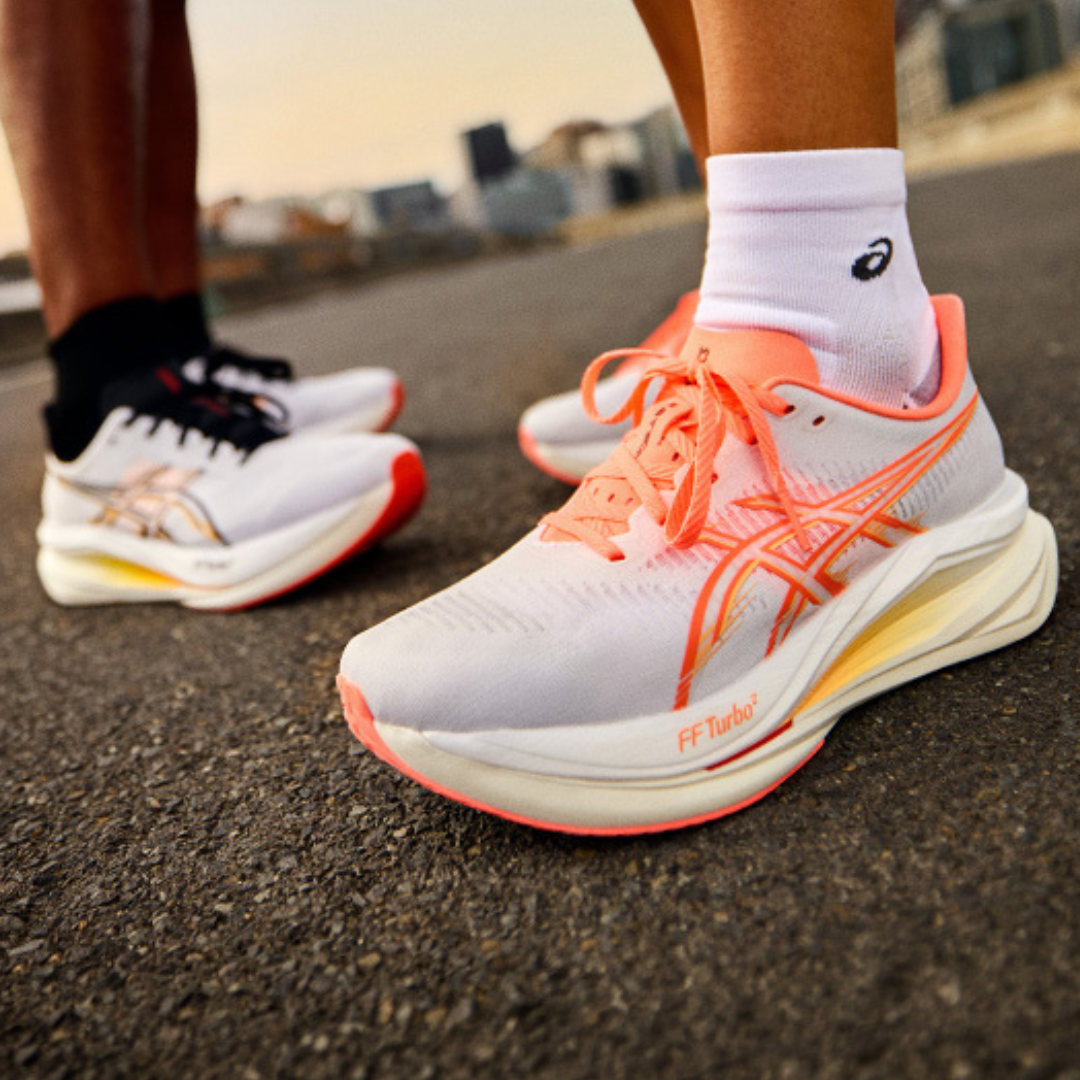
The ASICS Sonicblast 2 returns with a very clear idea: to be that shoe you can choose when you want to run fast, but you don't need a pure racing flat.
ASICS has retained the foam combination that gave the original Sonicblast its distinctive character, but has modified both its distribution and the plate design. The result is a shoe that aims for more rebound, a slightly more comfortable ride, and enough versatility to combine quality training sessions with more relaxed runs.
Weighing approximately 242 grams in men's sizes , with an 8mm drop and a high-volume midsole, the Sonicblast 2 fully embraces this new generation of fast training shoes where cushioning and responsiveness no longer have to be at odds.
Read more: New Balance SuperComp Rebel v1: review and first impressions
ASICS Sonicblast 2: Key Facts
- Weight: approximately 242 g for men / 212 g for women
- Drop: 8 mm
- Profiles: 46mm/38mm
- Midsole: FF TURBO SQUARED + FF BLAST MAX
- Board: ASTROPLATE by Pebax®
- Upper: engineered mesh
- Sole: ASICSGRIP
- Recommended use: pace training, intervals, fartlek, tempo runs and fast runs
- Introductory price: 190 €
A midsole with two personalities
Much of the Sonicblast 2's performance can be explained by its midsole.
ASICS combines FF TURBO SQUARED and FF BLAST MAX , two materials with different functions.
The FF TURBO SQUARED foam provides that extra elasticity and responsiveness. It's a highly resilient foam designed to quickly return energy after each impact.
Below that we find a greater presence of FF BLAST MAX , a compound more focused on providing protection and stability.
And what does ASICS achieve by mixing them?
A shoe that doesn't just aim to bounce a lot, but to do so in a relatively controlled way.
The Sonicblast 2 should feel responsive when we increase the pace , but with a platform that is sufficiently protected so that it doesn't become overly aggressive when the workout is longer.
And that detail is important.
Many fast running shoes perform particularly well during short intervals or when you're fresh, but they can become more demanding when fatigue sets in or your foot strike loses precision. The increased performance of the FF BLAST MAX aims precisely to broaden that range of use.
ASTROPLATE: an open plate to let the foam do its work
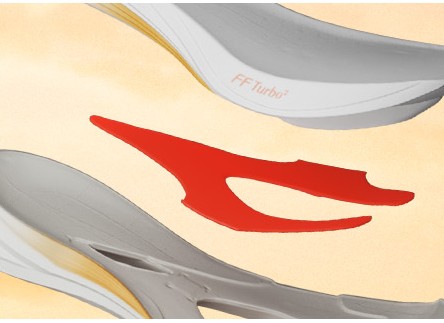
One of the most interesting changes in the Sonicblast 2 is the new ASTROPLATE from Pebax®.
Rather than a plate shaped like a conventional trident, we could describe it as a kind of two-armed fork , since the central area remains open.
And that's precisely the key.
Through this central space descends the top layer of FF TURBO SQUARED , the most reactive foam in the midsole, forming in the forefoot the characteristic pod or “trampoline” of the Blast family.
In this way, ASICS concentrates the foam with the highest rebound right in one of the areas where it can be compressed the most during takeoff.
The ASTROPLATE continues to provide structure and help direct the forward transition, but by leaving the central area free it allows the FF TURBO SQUARED to compress and recover its shape more freely.
Trampoline Pod: more FF TURBO SQUARED right where it matters
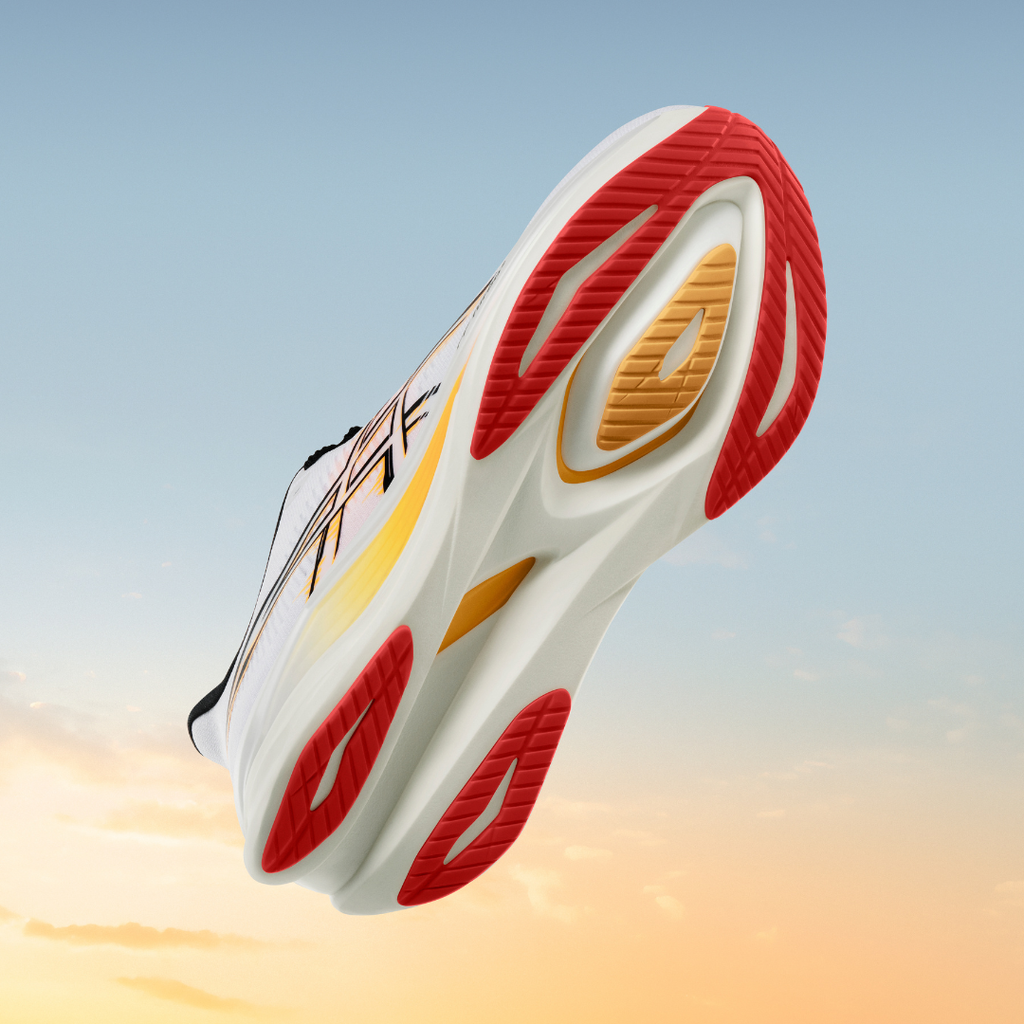
That central block of FF TURBO SQUARED is what generates the so-called Trampoline Pod.
During the support phase, this area compresses and, as it moves into the toe-off phase, it quickly recovers its shape. The idea is to enhance a more elastic and responsive feel in the forefoot , especially when we start running at higher speeds.
It's a solution we've already seen within the Blast family: creating a specific zone of more reactive foam that can deform more freely to increase the feeling of bounce.
In the Sonicblast 2, the difference is that the ASTROPLATE's geometry itself is designed around this pod, combining structure on the sides and greater compression freedom in the center.
High altitude, but with the intention of running fast
The approximately 46 mm heel and 38 mm forefoot are noteworthy.
We are dealing with a very high shoe.
However, ASICS uses a fairly pronounced forefoot rocker , causing the midsole to curve progressively upwards in the forefoot.
This helps reduce the feeling of having to flex the entire shoe with each step and makes it easier for the body to continue moving forward once we begin the transition.
Put more simply: there's a lot of foam underfoot, but the geometry is designed to prevent it from feeling awkward.
The combination of rocker, ASTROPLATE and FF TURBO SQUARED is precisely what should give Sonicblast 2 that feeling of wanting to move forward when we start to increase the pace.
How should running feel?
By design, the Sonicblast 2 aims for a cushioned, elastic, and progressively more responsive stride as we increase the intensity.
It doesn't seem designed to offer an extremely aggressive feel.
His personality should appear especially when we leave behind the calm rhythms and start running with a bit more intention.
In easy shoots we can take advantage of the amount of foam and protection, although that's probably not where it stands out the most.
However, when we start doing changes of pace, fartlek, long intervals or tempo sessions , the combination of foam, plate and rocker should start to make much more sense.
It's a shoe for those who enjoy a bouncy feel, but prefer something more forgiving than a dedicated racing shoe.
Lightweight upper designed for fast training
ASICS uses a lightweight, open technical mesh.
The construction aims to provide support without the need for too many reinforcements, which helps to contain the weight and improve ventilation.
The padding is also relatively moderate.
We are not dealing with a particularly voluminous or padded upper, but rather a configuration more in line with the dynamic character of the shoe.
The goal is once again to find a balance: enough structure to train regularly, but avoiding unnecessary equipment that could add weight.
ASICSGRIP: good traction without filling the entire rubber outsole
At the bottom we find ASICSGRIP , one of ASICS' most proven rubber compounds.
The brand does not completely cover the midsole.
The rubber is concentrated mainly in the areas where the most wear occurs, leaving other areas exposed to reduce weight and allow the midsole to work more freely.
It's a logical decision considering the positioning of the shoe.
The Sonicblast 2 needs enough rubber to withstand many kilometers of training, but it's also not desirable to make it a heavy or excessively rigid shoe.
What kind of training would we use the Sonicblast 2 for?
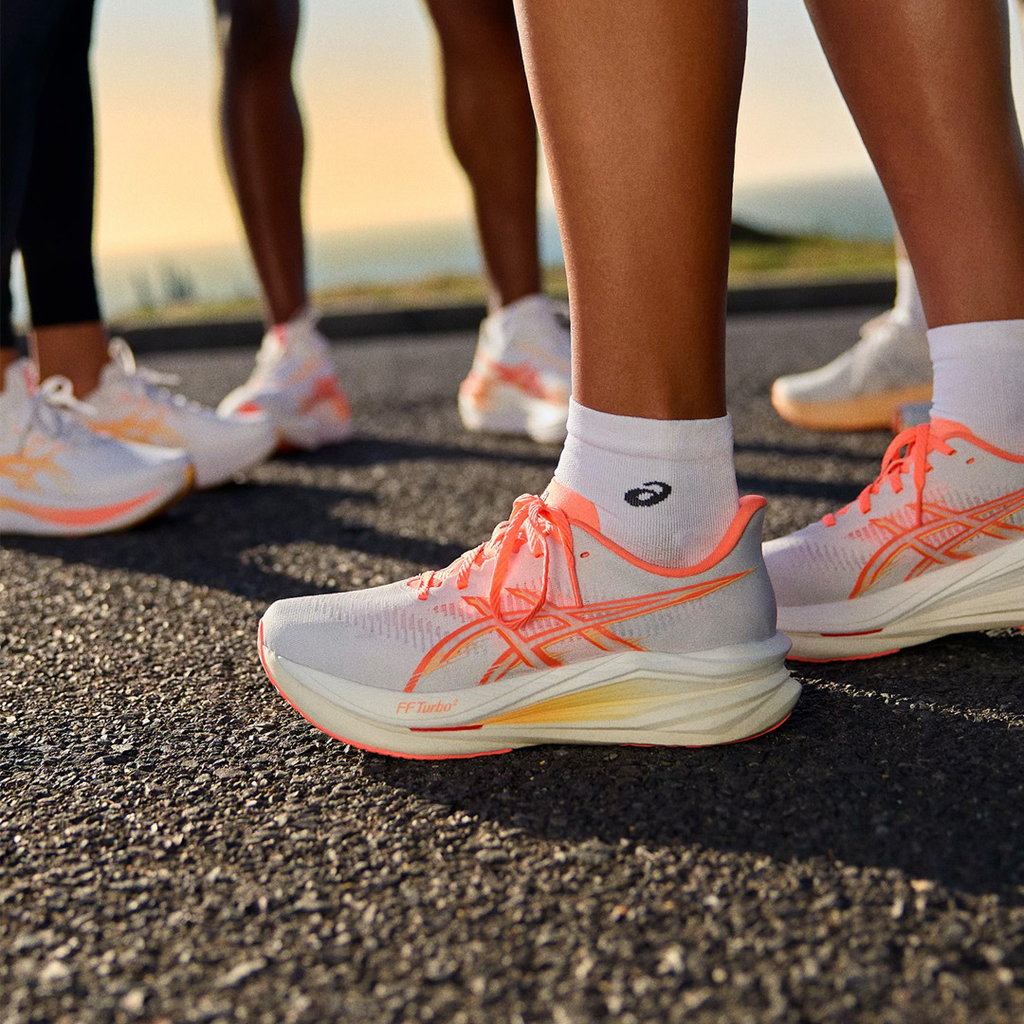
This is probably where one of its biggest attractions lies.
It is not necessary to reserve it exclusively for making series.
The Sonicblast 2 might make sense in:
Progressive filming
We started out calm and ended up running much faster.
Tempo workouts
Especially long sessions where we want to maintain a high pace without using a racing shoe.
Fartlek and changes of pace
The combination of rebound and rocker should respond well when we constantly change speed.
Long intervals
Series of 1.000, 2.000 or 3.000 meters where we assess both response and cushioning.
Quick block throws
This is a particularly interesting scenario because it allows you to take advantage of the midsole's protection during the easy kilometers and its response during the more intense blocks.
It could also be used as a daily training shoe for runners who like a particularly dynamic stride.
Is it a shoe for competition?
It can do that. But that doesn't seem to be its main reason for existing.
The Sonicblast 2 occupies that increasingly interesting space between traditional training shoes and super-racing shoes.
It features responsive foam, a plate, and a meticulously crafted geometry, yet maintains a performance that's more forgiving for everyday training. For competition, ASICS offers more specialized alternatives. The advantage of the Sonicblast 2 is precisely that you don't have to run at race pace to benefit from it.
Who do we recommend the ASICS Sonicblast 2 for?
Primarily for runners who want a training shoe with a more fun and faster feel than a conventional daily trainer.
Especially interesting if:
- You perform one or more quality workouts per week;
- You like shoes with plenty of cushioning;
- You're looking for rebound but don't want an extremely stiff carbon plate;
- You do long workouts in which you combine different rhythms;
- You want a fast shoe that you can also use quite often.
Lightweight and midweight runners are likely to be the ones who can most easily take advantage of its dynamic character, although the greater presence of FF BLAST MAX should make this second generation somewhat more accessible to a wider range of runners.
ASICS Sonicblast 2: Conclusion
The Sonicblast 2 continues to move away from the idea that we need to choose between a comfortable shoe or a fast shoe.
With an FF TURBO SQUARED and FF BLAST MAX midsole , a new Pebax® ASTROPLATE with a trident design and a forefoot geometry designed to enhance rebound, ASICS seeks a shoe capable of changing registers with ease.
It has enough cushioning to rack up miles, but its real territory begins when we accelerate.
Long sets, fartlek, tempos, progressives or runs with fast blocks seem to be the scenarios where it makes the most sense.
It is not intended to replace a super racing shoe.
And that's probably precisely where its appeal lies: having a good part of that fast and springy feeling in a shoe that we can use much more during the week.
Available from September 1st at 365Rider.com