

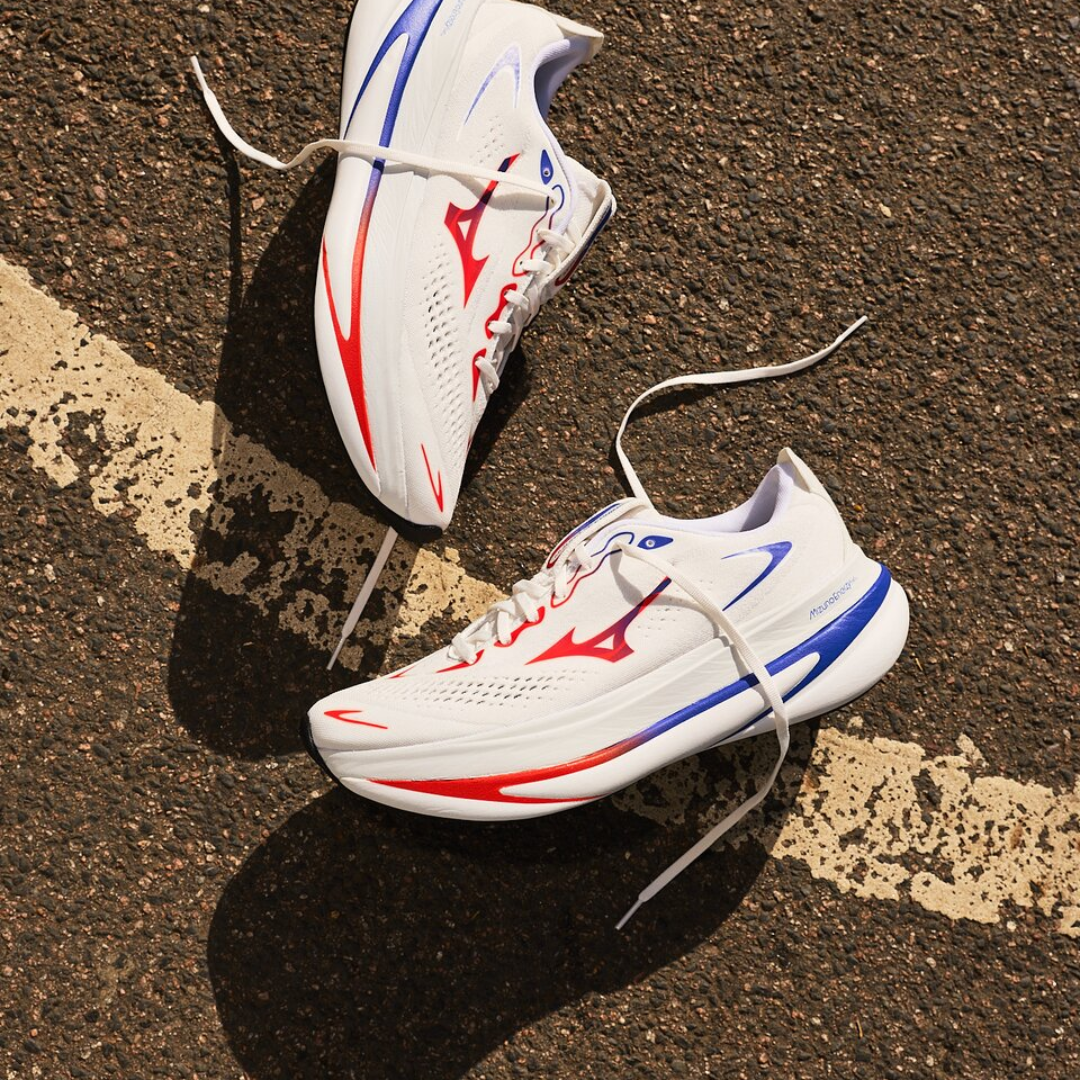
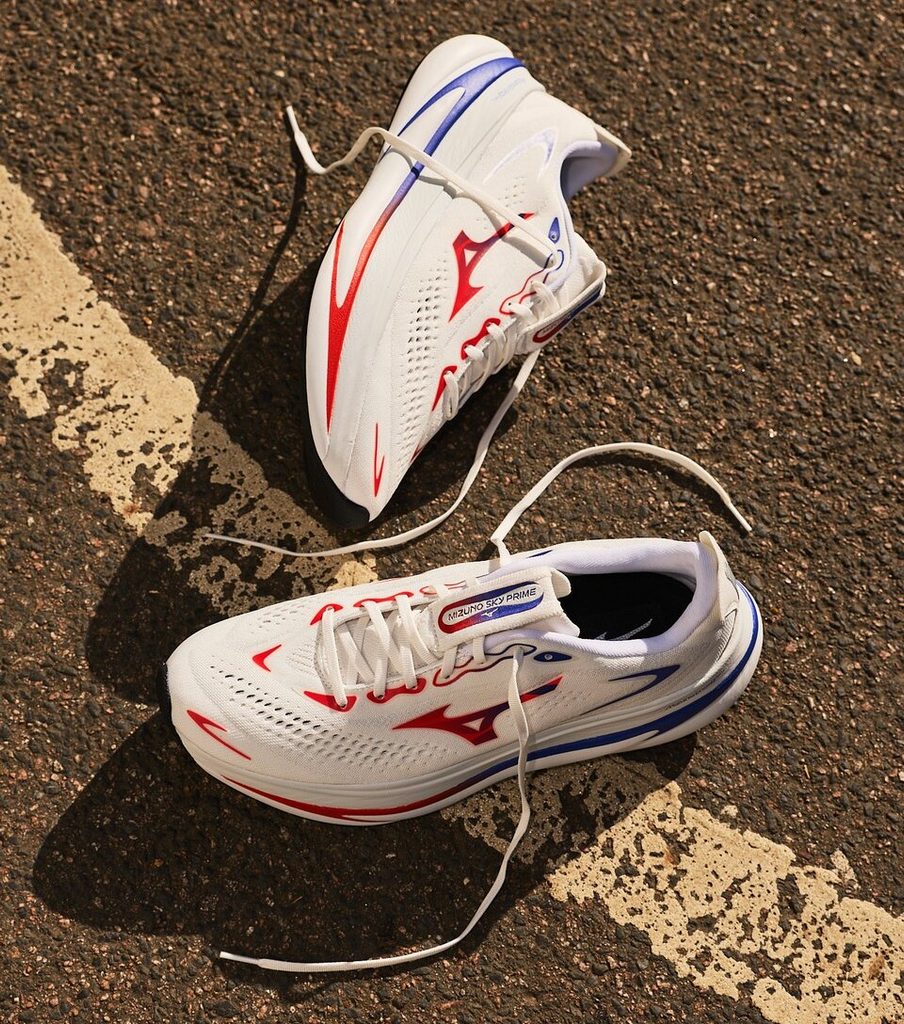
The Mizuno Sky Prime falls squarely into the maximalist running shoe category. With a 47mm heel height, 41mm forefoot height, and a 6mm drop , it makes no attempt to disguise what it is: a shoe designed for racking up miles with plenty of underfoot protection.
But after running in them, the most interesting thing isn't the amount of cushioning. It's how well Mizuno has managed to control all that volume.
Plenty of cushioning, but without sinking in
The midsole combines MIZUNO ENERZY NXT+ in the upper area with MIZUNO ENERZY NXT underneath.
On asphalt, this translates to a very cushioned, but not excessively soft, foot strike. There is compression upon landing, although you never get that feeling of sinking too deeply into the foam. And that seems to us to be one of its strengths.
The Sky Prime clearly prioritizes protection, but maintains enough structure to keep the stride stable and predictable.
It's not a particularly explosive shoe, nor does it offer the rebound of a super trainer. The feeling here is more about cushioning the impact and making it easier to keep running comfortably.
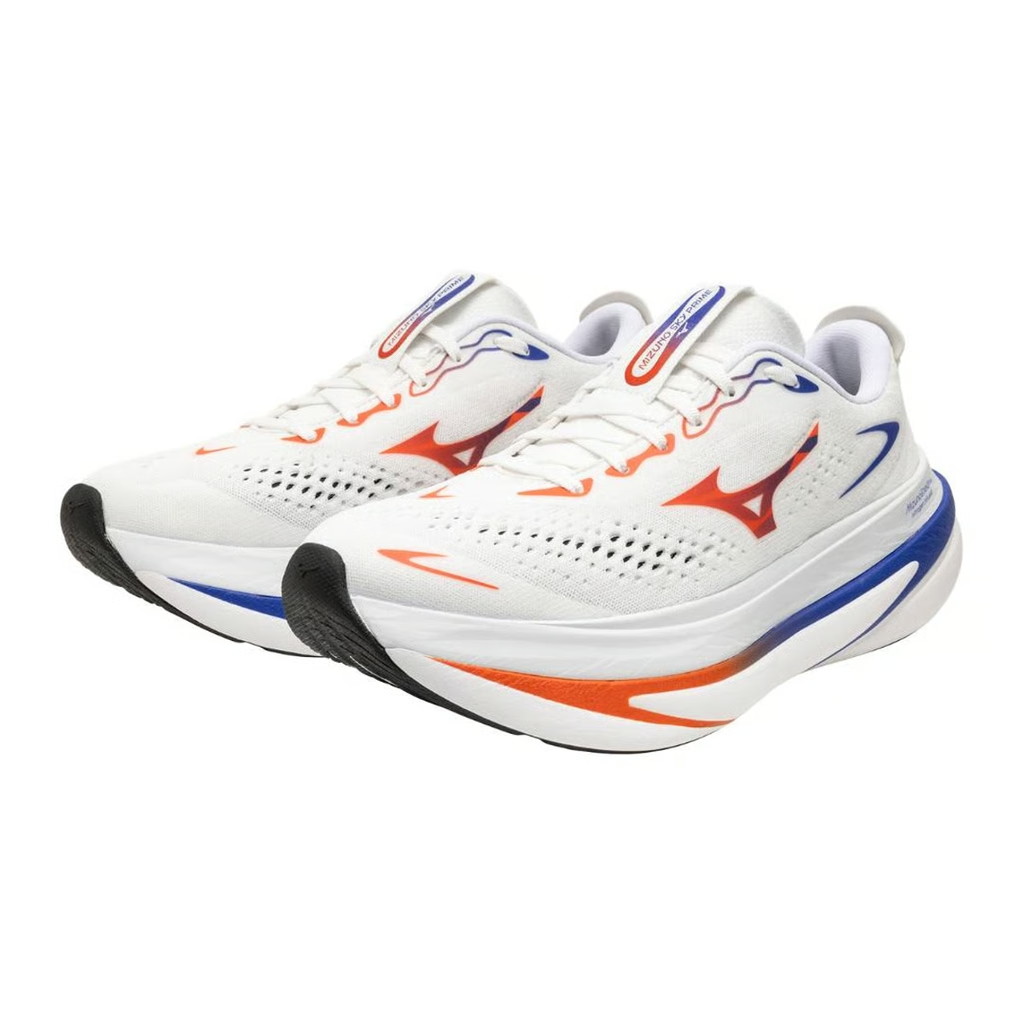
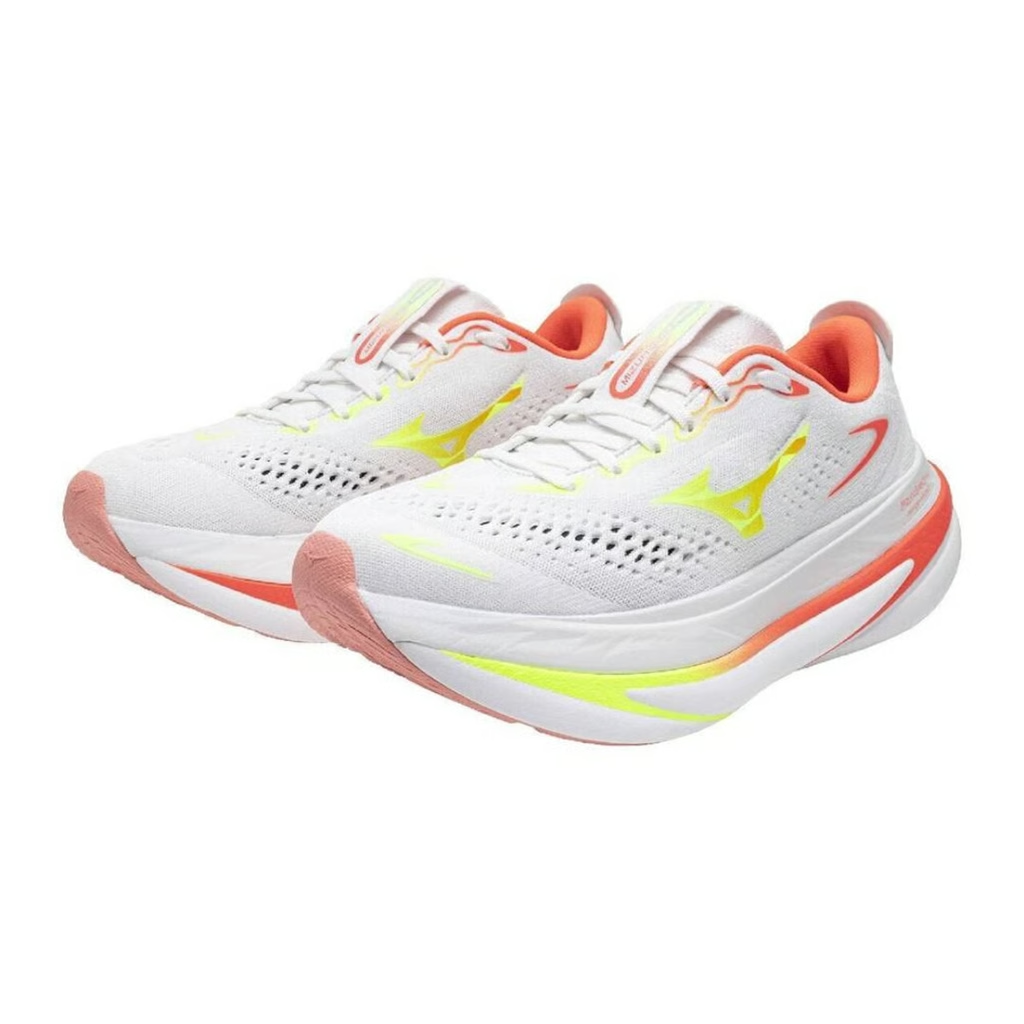
More stable than it seems
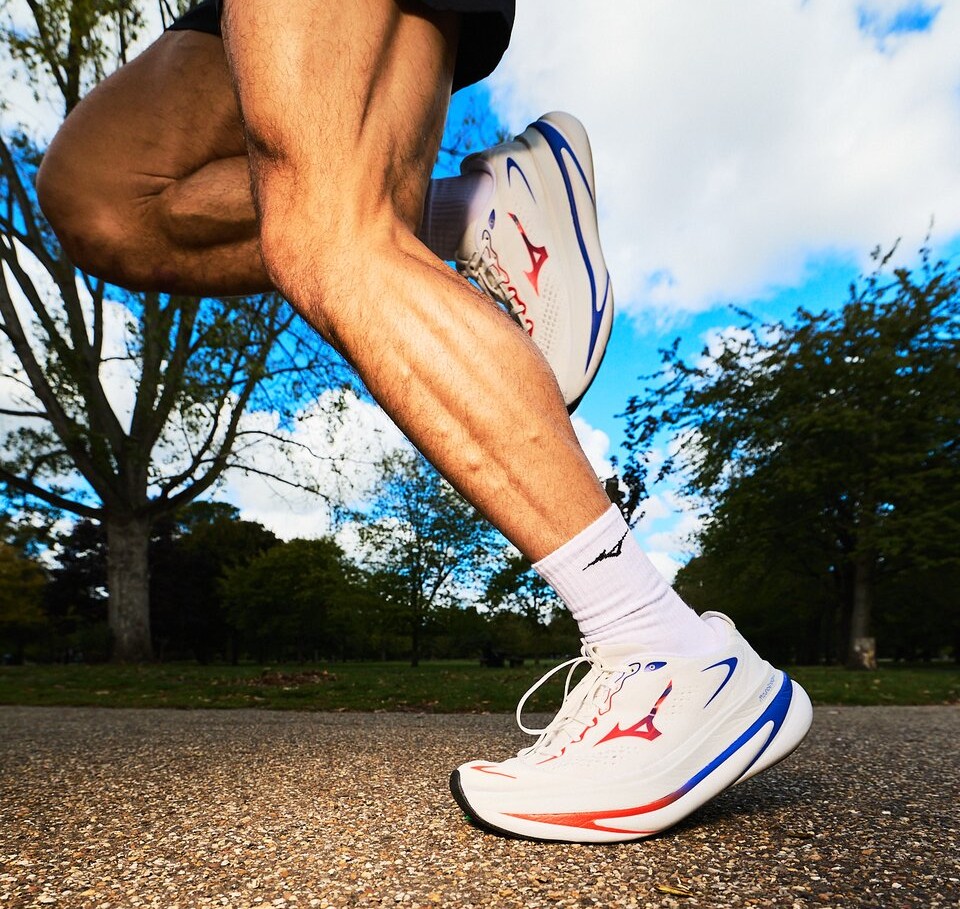
With 47 mm under the heel, we might expect a shoe that's somewhat difficult to control. That's not the case.
Mizuno uses a very wide platform, especially in the rear and midfoot area, which provides considerable stability even when landing on the heel or midfoot.
We're not talking about a stability shoe or a model specifically designed to control pronation, but rather a surprisingly stable neutral shoe for its height.
And this feature becomes even more valuable when your legs are tired and your technique is no longer so precise.
Where it works best: long shoots
The Sky Prime feels especially comfortable when we find a steady rhythm.
On easy runs and long runs, we can pretty much forget what we're wearing on our feet. The transition is smooth, and the shoe moves with each stride without demanding too much.
That's where we really find meaning in all that fuss.
In half marathon or marathon preparations, it can work very well as a shoe to accumulate kilometers at low or moderate intensities, especially when we want to reduce muscle stress.
It also makes a lot of sense as a recovery shoe.
And what happens when we increase the pace?
This is where its limitations begin to appear. The Sky Prime isn't lightweight, and this becomes noticeable when trying to significantly increase stride frequency or make changes of pace.
You can run fast with it, but that's not where it feels most at home.
The amount of foam, the width of the platform, and the construction of the upper make it clearly preferable to a steady pace over frequent accelerations.
For interval training, fartlek, or tempo workouts, we'd opt for a lighter, more responsive shoe. Its natural habitat is elsewhere.
An upper designed for comfort
The upper follows the same philosophy as the midsole. We find a soft engineered mesh , a comfortable tongue, and plenty of padding around the foot.
The fit is comfortable for long rides and allows for some expansion of the foot as the kilometers go by.
Runners with wide feet will likely appreciate this extra room. For particularly narrow feet, we recommend paying closer attention to the lacing adjustment.
The heel is held securely and we have not found it necessary to overtighten the lacing system to achieve a good fit.
Weight is its main limitation
It's not worth trying to hide it: the Mizuno Sky Prime is a heavy shoe.
At easy paces it is not particularly bothersome because the geometry helps to make the transition smooth.
The problem arises when we want to run faster.
That's where it stops feeling simply robust and the weight starts to be clearly noticeable.
That's why we wouldn't choose it as our only training shoe if we're looking for a lot of versatility.
Within a rotation, however, it has a very clear role.
Who do we recommend the Mizuno Sky Prime for?
We find it especially interesting for runners who:
- They produce a significant weekly volume.
- They are looking for maximum cushioning for easy rides.
- They are preparing for a half marathon or marathon.
- They want protection without an excessively soft midsole.
- They prioritize stability and comfort over lightness.
On the contrary, it wouldn't be our first choice for runners looking for a shoe that's agile, lightweight, or suitable for virtually any type of training.
Our conclusion
The Mizuno Sky Prime achieves something that isn't always easy in a maximalist shoe: offering plenty of cushioning without feeling unstable or excessively soft.
It is 47 mm tall, but when running it feels much more controlled than its figures might suggest.
Its best terrain is clearly easy runs, long rides and recovery training.
When we want to pick up the pace, its weight significantly limits the experience. But for its intended use, it's a comfortable, stable shoe, especially enjoyable when the training goal is simply to rack up the miles.
Mizuno Sky Prime in summary
Type: maximum cushioning
Area asphalt
Footstep: neutral
Drop: 6 mm
Level: 47mm/41mm
Midsole: MIZUNO ENERZY NXT+ + ENERZY NXT
Best use: easy shoots and long runs